Home › Yoga mats
Yoga mats compared on specs and live prices
We track 15 yoga mats and re-read their Amazon prices every day. Today the cheapest listed one is the Gaiam Premium 6mm at $21.00 and the dearest is the Liforme Classic at $164.95; the table below carries every figure with the date it was read.

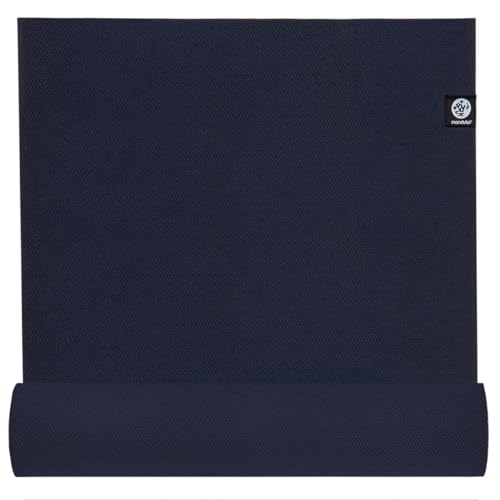


4 mm · 4.1 lb · Natural rubber
No live price today — see specs and alternatives

2 mm · 3.5 lb · Polyurethane top over rubber
No live price today — see specs and alternatives
5 mm · 5.2 lb · Polyurethane top over rubber
No live price today — see specs and alternatives
Specs side by side
| B Yoga B MAT Everyday 4mm | not listed | 4 mm | 4.1 lb | Natural rubber |
| Gaiam Premium 6mm | $21.00 | 6 mm | 3.26 lb | PVC |
| JadeYoga Fusion | not listed | 8 mm | 8.5 lb | Natural rubber |
| JadeYoga Harmony | $114.95 | 4.8 mm | 5 lb | Natural rubber |
| JadeYoga Voyager | not listed | 1.6 mm | 1.5 lb | Natural rubber |
| Liforme Classic | $164.95 · ships later | 4.2 mm | 5.5 lb | Polyurethane top over rubber |
| Liforme Classic Travel | not listed | 2 mm | 3.5 lb | Polyurethane top over rubber |
| Lululemon The Mat 5mm | not listed | 5 mm | 5.24 lb | Polyurethane top over rubber |
| Manduka Begin | $91.78 · ships later | 5 mm | 2.5 lb | TPE |
| Manduka GRP Adapt | $94.00 · ships later | 5 mm | 5.8 lb | Polyurethane top over rubber |
| Manduka PRO | $144.00 | 6 mm | 7.5 lb | PVC |
| Manduka PRO Travel | $70.65 | 2 mm | 2.4 lb | PVC |
| Manduka PROlite | $111.95 | 4.7 mm | 4.6 lb | PVC |
| Manduka X | $69.36 | 5 mm | 3.4 lb | TPE |
| Manduka eKO | $87.54 | 5 mm | 7 lb | Closed-cell natural rubber |
Other equipment we track
- Meditation cushions — 2 we track, compared the same way
- Yoga bolsters — 3 we track, compared the same way
By material
- Natural rubber — 4 mats we track
- PVC — 4 mats we track
- Polyurethane top over rubber — 4 mats we track
- TPE — 2 mats we track
- Closed-cell natural rubber — 1 mat we track
By what you practise
- Best for Bad Knees
- Best for Beginners
- Best for Carpet
- Best for A Tight Budget
- Best for Eco-Friendly Materials
- Best for Hot Yoga
- Best for Grip
- Best for Outdoor Use
- Best for Sweaty Hands
- Best for Tall People
- Best for Extra Cushioning
- Best for Travel
Prices on every one of these pages carry the date they were read. The tracker shows every reading, and the deals page flags anything below its own median.
How to read these numbers
Thickness is the single figure most people shop on, and it is the one that misleads most. Below about 3 mm you feel the floor through the mat, which suits balance work and punishes knees. Around 5 to 6 mm is the usual compromise. Past 8 mm a mat starts working against standing poses because the surface moves under you.
Density matters as much as thickness and almost nobody publishes it, so compare weight at a given thickness: two 5 mm mats where one weighs 7 lb and the other 4 lb are not the same product. The heavy one is denser, lies flatter and lasts longer; the light one is the one you will actually carry.
Surface type decides how the mat behaves once you sweat. A closed-cell surface keeps moisture on top — easy to wipe, slippery until you do. An open-cell surface takes moisture in, which holds grip but needs a real wash rather than a wipe.
Price is the least stable number here, which is why every one on this site carries the date it was read. A mat that was $97 last week is not evidence of anything today.